If a house fire just went out in Gulfport and the fire department has cleared the scene, call HomeLyft Restoration Gulfport at (228) 284-5200. The company holds IICRC Fire and Smoke Restoration Technician (FSRT) certification, carries a 5.0 Google rating across 74 reviews, and runs a 24/7 emergency line, so the same call that gets your windows boarded up tonight can also start documenting the loss for your insurance adjuster.
Who Do You Call First: 911, the Fire Marshal, or a Restoration Company?
Call 911 first if the fire isn’t fully out, if you smell gas, or if downed power lines are near the structure. Firefighters and the fire marshal handle active hazards and the official cause-and-origin report; that report matters later for your claim, so ask how to request a copy before you leave the scene.
Once the fire department releases the property back to you, that’s the moment to call a restoration company, not a general contractor or a cleaning service. A fire scene that’s just been extinguished is still unsafe to walk through unassisted: floors can be weakened, soot carries combustion byproducts, and standing water from hose lines creates its own secondary damage. A restoration crew secures the structure first (boarding broken windows, tarping a burned roof section) before anyone starts cleanup.
Call your insurance company after mitigation is underway, not before. Most homeowners policies require you to prevent further damage, so getting the property secured and documented first actually protects the claim. Your adjuster will want the restoration company’s initial scope and photos, not a verbal description.
What Happens When You Call a Fire Damage Restoration Company?
The first call is mostly triage. Expect to be asked: is anyone injured, is the structure currently occupied, is there an active gas or electrical hazard, and roughly which rooms took the worst damage. Have your insurance carrier’s name and your policy number ready if you have them, though it’s fine if you don’t yet.
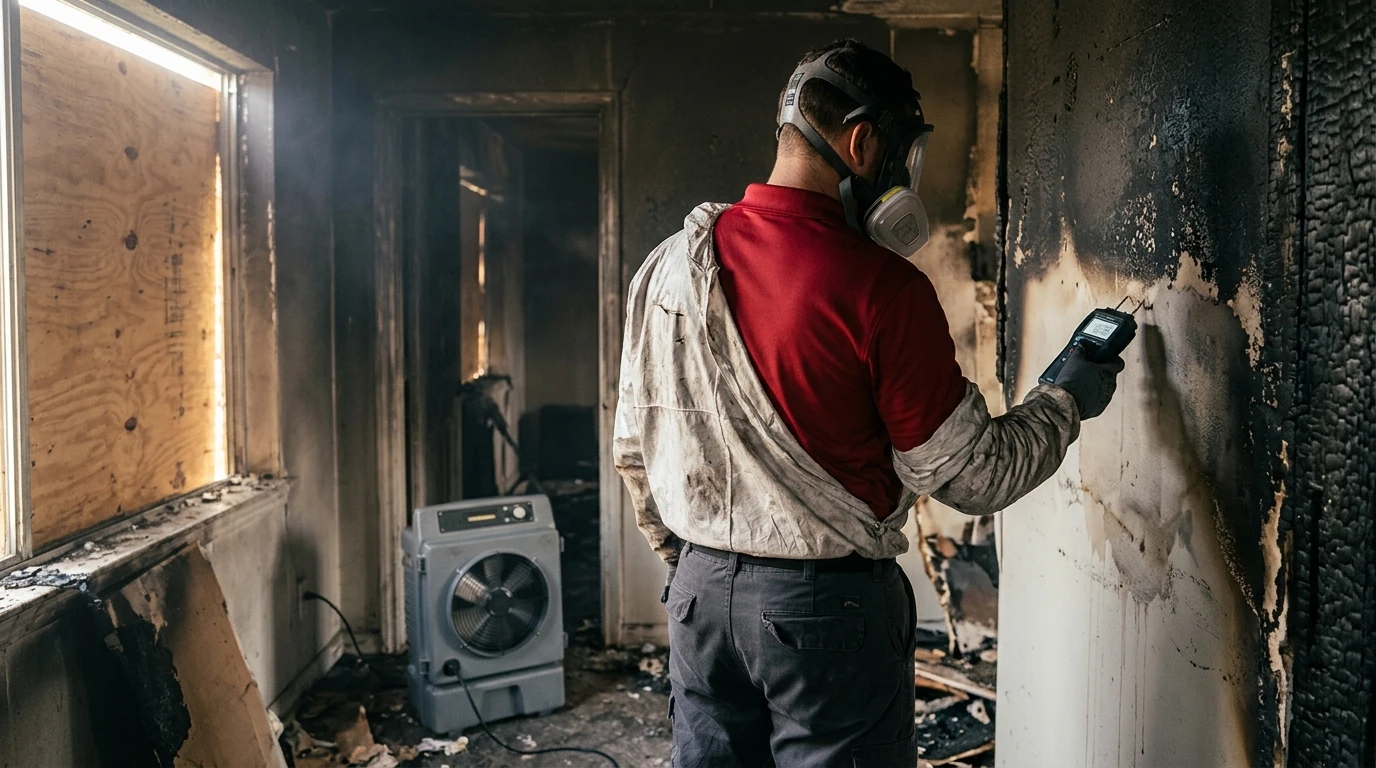
On arrival, a tech walks the property with a moisture meter and camera, photographing char patterns, soot deposits, and water intrusion from suppression efforts before anything is moved or cleaned. That photo and moisture record becomes the baseline for your insurance estimate and for documenting fire damage for an insurance claim.
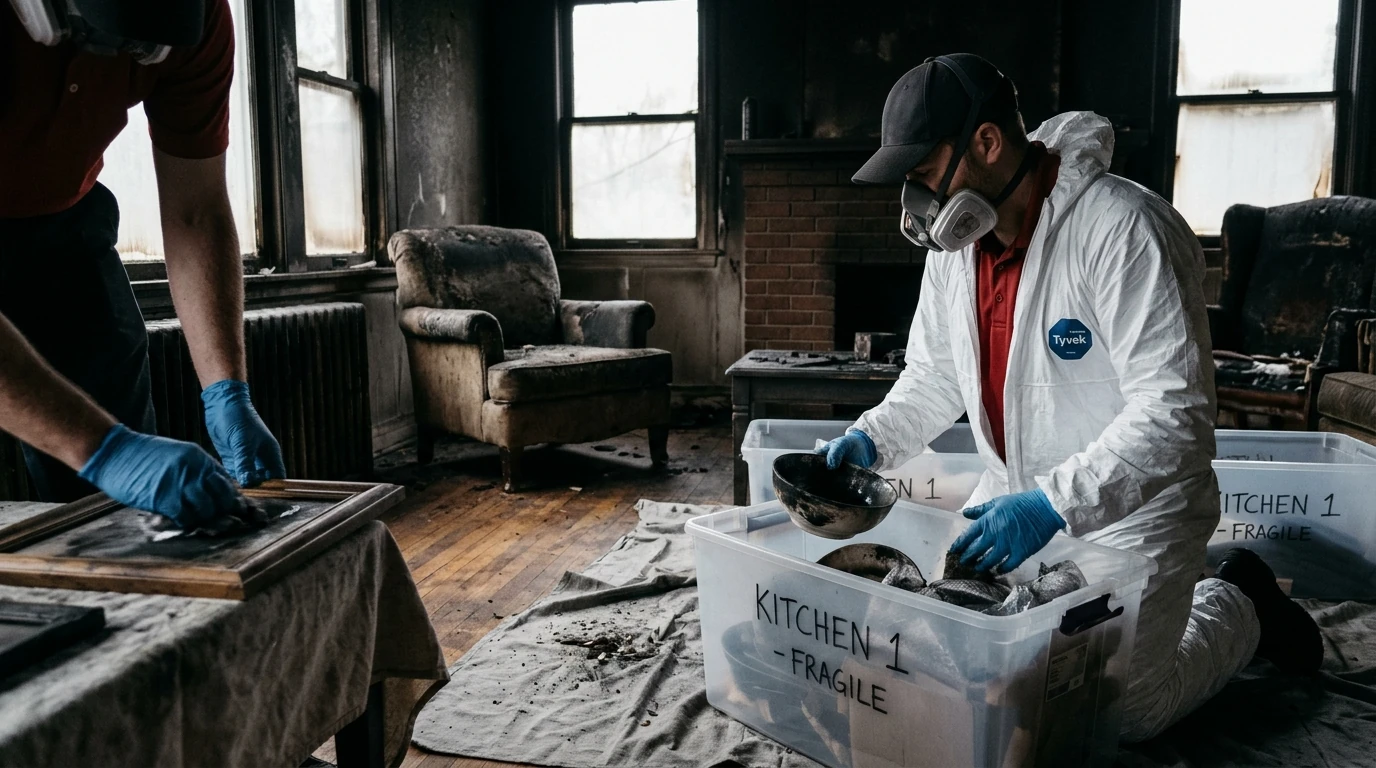
Securing the property comes next: plywood over broken windows, tarping an exposed roof, and locking down entry points so the house isn’t open to weather or looting while the claim moves forward. From there the work splits into two tracks that often run at the same time: structural cleanup (soot removal from framing, HVAC decontamination, demolition of materials too damaged to save) and contents pack-out, where salvageable belongings are inventoried, boxed, and moved offsite for specialized cleaning rather than left to absorb more smoke odor in a half-demolished house. Severely charred materials get removed and rebuilt rather than restored; the smoke damage restoration and fire damage restoration teams coordinate so you don’t have two separate companies arguing over where one scope ends and the other begins.
How Do You Document Fire Damage for Your Insurance Claim?
Document everything before cleanup starts, not after: wide shots of every room, close-ups of char and soot on specific items, and a running list of anything you know is a total loss. The Insurance Information Institute notes that claims move faster when the homeowner’s own documentation lines up with the contractor’s written scope, so keep every receipt for temporary lodging, board-up materials, and emergency mitigation work.
Ask the restoration company for a written scope of work and itemized estimate before any demolition begins, and keep a copy of the fire department’s incident report alongside it. If you’re staying elsewhere while repairs happen, most homeowners policies include additional living expense (ALE) coverage; your policy language, not a general rule of thumb, determines the limit and duration, so read that section directly or ask your adjuster.
Why Does Smoke Odor Need Professional Treatment, Not Just Air Freshener?
Smoke odor needs professional treatment because the particles that carry it embed into drywall pores, fabric fibers, and HVAC ductwork, not just the surface you can see. Surface cleaning or an air freshener masks the smell temporarily; the odor returns once humidity rises again, because the source particles are still in the material.
Restoration techs treat odor with thermal fogging, HEPA air scrubbing, and ozone or hydroxyl generators depending on how deep the smoke penetrated, following the ANSI/IICRC S700 standard for fire and smoke restoration. HVAC ducts almost always need cleaning too; running the system before duct cleanup just recirculates soot through the house. The American Red Cross and the U.S. Fire Administration both recommend against re-entering a smoke-damaged home for extended periods until it’s been professionally assessed, since soot residue carries combustion byproducts that aren’t safe to breathe long-term.
If the damage is contained to one room, a fire restoration crew can usually treat and restore it; if structural members are charred through or the roof is compromised, that section moves into rebuild rather than restoration, and your scope of work should say so explicitly.
Gulfport’s older housing stock, along with homes across Biloxi, D’Iberville, and Long Beach, often has layered interior finishes from past renovations, which means smoke and soot can hide in more places than a newer build. A walkthrough that checks attic space and duct runs, not just visible walls, catches that before it becomes a callback.
Getting the structure secured and the documentation started within the first day protects both the home and the claim. From there, the restoration scope and your adjuster’s estimate should move in parallel, not in sequence.
About HomeLyft Restoration Gulfport
HomeLyft Restoration Gulfport is an IICRC Certified Firm serving Gulfport, MS and the surrounding Mississippi Gulf Coast since 2022 (license RO 2728). Its technicians hold IICRC FSRT (Fire & Smoke) and WRT (Water) certifications, and the company handles fire and smoke damage restoration, water damage restoration, mold remediation, storm damage restoration, and reconstruction across the region, answering calls 24/7.
Video Transcript
A house fire just went out in your Gulfport home, and the fire department cleared the scene. Who do you call next? If flames are still burning, you smell gas, or power lines are down, call 911 first before anything else. Once firefighters release your property, call a restoration company, not a general contractor or a cleaning service. A fresh fire scene hides weak floors, toxic soot, and hose-line water damage, so a trained crew secures it safely first. That first call is mostly triage: is anyone hurt, is the home occupied, and which rooms took the worst damage? A technician then walks the property with a moisture meter and camera, photographing char, soot, and water before anything moves. Crews board windows, tarp the roof, and split work into structural cleanup and contents pack-out for salvageable belongings. Document every room before cleanup starts, keep receipts, and ask for a written scope of work for your adjuster. Smoke particles soak deep into drywall pores, fabric fibers, and HVAC ductwork, so professional thermal fogging and air scrubbing treat odor at the source. Call your insurance company only after mitigation starts, and call HomeLyft Restoration Gulfport at +12282845200 to schedule an assessment.