If you just lifted the crawl space access door and found standing water, a sour smell drifting up through the floor vents, or soft spots near an exterior wall after a Gulf Coast downpour, call HomeLyft Restoration Gulfport at (228) 284-5200. HomeLyft is IICRC Certified Firm and answers 24/7, so the call goes through whether the water showed up at 2 p.m. or 2 a.m.
Most homes along the Coast, from Bayou View to the Pass Road corridor, sit on pier-and-beam or raised slab foundations instead of basements. That crawl space is the first place water from a storm surge, a heavy rain event, or a failed plumbing line ends up, and it’s often out of sight long enough to do real damage before anyone notices.
Who Do I Call First, a Plumber or a Restoration Company?
Call a plumber first only if the water is actively running from a supply line, a water heater, or a fixture you can still hear or see flowing. Stop the source before anyone can dry anything.
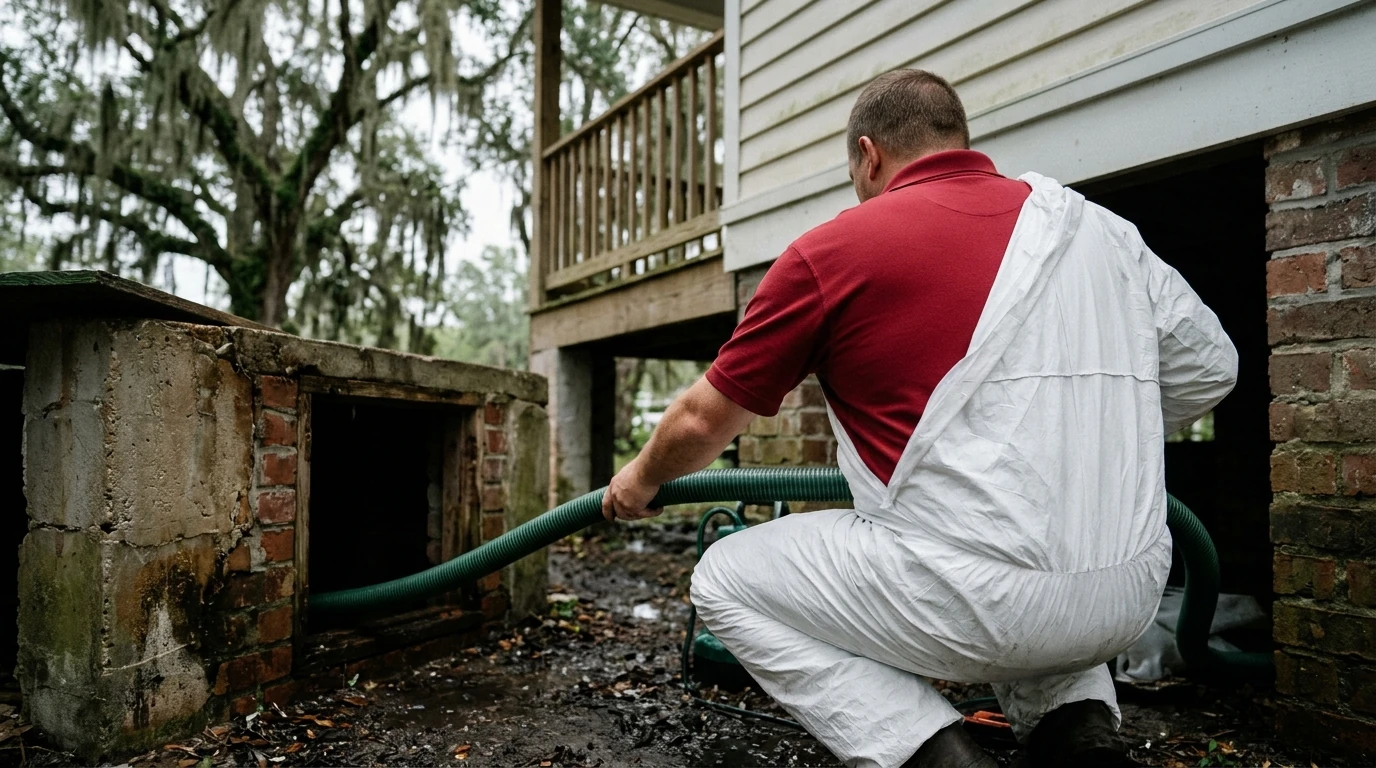
If the water came from outside instead, storm surge, ponding rain water that worked its way under the slab, or a high water table pushing moisture in through the vents, there’s no valve to shut off. That’s a restoration call, not a plumbing call. A restoration crew pumps out standing water, extracts what’s soaked into the soil and insulation, and sets drying equipment before mold has a chance to establish.
Two situations change the order of calls entirely. If you smell gas, see a downed power line near the crawl space entry, or your breaker panel is wet, call 911 or your utility company before anyone goes near the access door. And if the water is visibly gray or has a sewage odor, likely a backed-up drain or overwhelmed septic line, treat it as contaminated black water and stay out until a crew in proper PPE handles it.
Signs you actually have a problem under the house, even without visible standing water: a musty smell through the HVAC registers, flooring that feels spongy near an exterior wall, a sudden spike on your water bill, or visible condensation on ductwork in the crawl space. Any of those is worth a look before the next heavy rain makes it worse.
What Happens When a Restoration Crew Handles a Flooded Crawl Space?
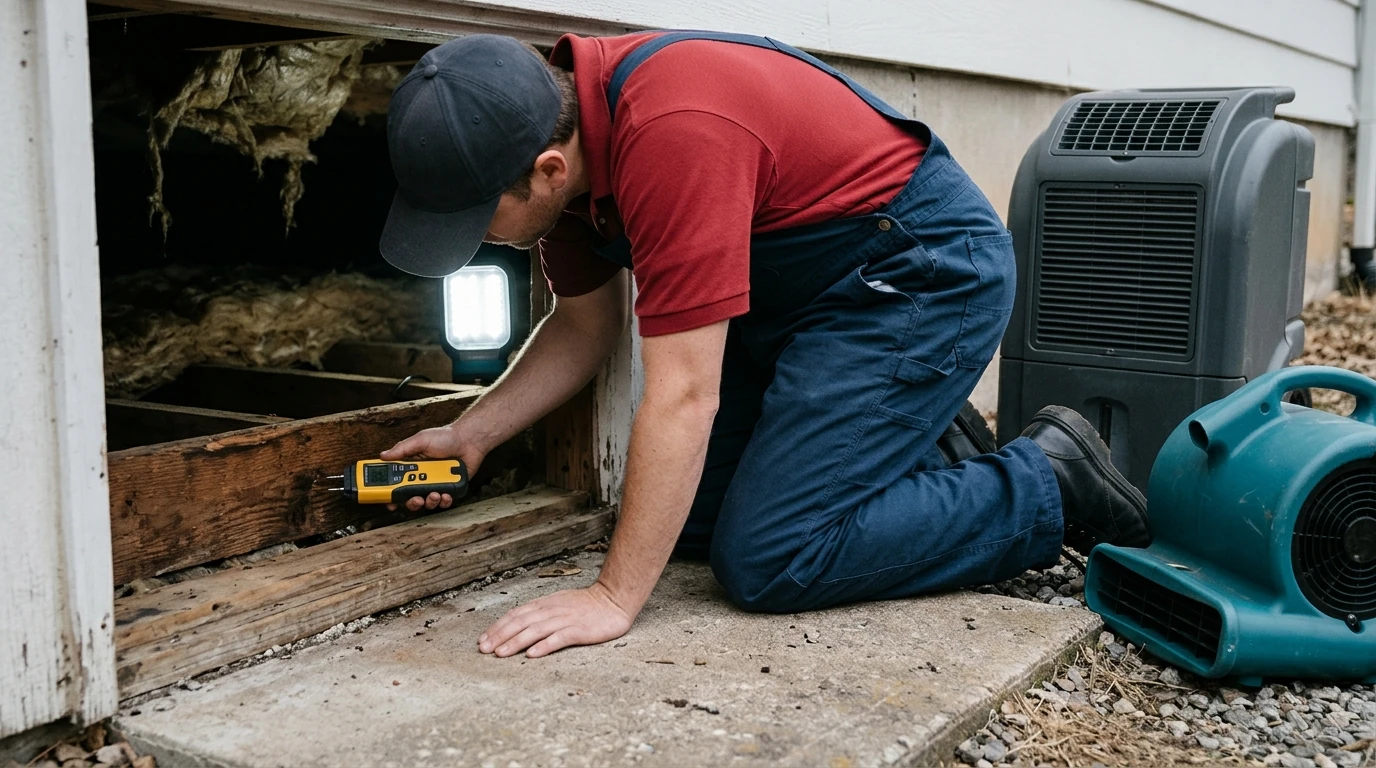
A crew pumps or extracts the standing water first, then measures moisture in the subfloor, joists, and any insulation before deciding what stays and what comes out. That assessment, not guesswork, drives the rest of the job.
Wet fiberglass batt insulation almost never dries back to spec. Once it’s saturated it sags off the joists and loses its R-value, so it typically gets pulled and replaced rather than dried in place. Subfloor and floor joists get checked for delamination and soft spots; anything compromised structurally gets flagged for repair before the crawl space is closed back up.
Drying follows the ANSI/IICRC S500 standard for water damage restoration: industrial air movers and low-grain-refrigerant dehumidifiers run in the crawl space until moisture meter readings confirm the wood framing is back to a dry standard, not just “looks dry.” In Gulf Coast humidity, that step matters more than almost anywhere else in the country, because ambient moisture outside keeps pushing back against the drying effort the whole time.
Is a Flooded Crawl Space Covered by Homeowners Insurance?
It depends entirely on where the water came from. A standard homeowners policy typically covers sudden, accidental water damage, like a supply line that bursts overnight, but it generally excludes flood water (storm surge, rising water, water that entered from outside the structure).
Flood coverage for storm surge or rising water requires a separate flood policy through the National Flood Insurance Program or a private flood carrier, which is common along the Mississippi Gulf Coast given the area’s flood zones. If the water under your house came from a sewer backup or a failed sump pump, that’s only covered when a water backup endorsement has been added to the policy, not automatically.
Document everything before cleanup starts: photos of the standing water, the access point, and any visible damage to insulation or framing. Our guide to homeowners insurance and water damage walks through what adjusters typically ask for. Whatever the source, mitigating the damage promptly protects the claim either way, since insurers expect homeowners to limit further loss once water is discovered.
Do You Need Crawl Space Encapsulation After the Flood Dries Out?
If this isn’t the first time water has shown up under the house, encapsulation is worth doing once drying is confirmed complete. A sealed vapor barrier, sealed vents, and a dedicated dehumidifier keep humidity and groundwater from working their way back in.
Mold can begin growing on wet wood and insulation within 24 to 48 hours, according to the EPA, and a crawl space that stays humid between storms is exactly the environment it needs. Our post on hidden mold signs covers what to watch for if the space wasn’t caught and dried quickly. Once a crawl space has flooded once, encapsulation is usually cheaper over the life of the home than repeating the extraction and drying process after every heavy rain.
A written moisture log and photos from the original flood also help if the space floods again and you need to show an insurer or a future buyer that it was properly remediated.
If water is sitting under your home right now, the next step is simple: get it out before it spreads to the subfloor and insulation any further. Call HomeLyft Restoration Gulfport at (228) 284-5200 to schedule a crawl space moisture assessment.
About HomeLyft Restoration Gulfport
HomeLyft Restoration Gulfport is an IICRC Certified Firm serving Gulfport and the Mississippi Gulf Coast since 2022, licensed in Mississippi (RO 2728) and insured. This guide was prepared by Terry Robinson with the HomeLyft team, whose technicians hold IICRC Water Restoration Technician (WRT), Applied Structural Drying (ASD), and Applied Microbial Remediation (AMRT) certifications. The company handles water damage restoration, crawl space encapsulation, mold remediation, storm damage restoration, and related reconstruction work across the Coast, answering calls 24/7.